| Altsächsisch multimedial
The “Altsächsisch multimedial” project is dedicated to the digital and philological re-editing of short Old Saxon texts from the 9th to the 12th century. For the first time, all 23 known short prose and verse texts are being collected and edited. | Norbert Kössinger (University of Bamberg) | | |
| Anthologia Palatina
A digital edition of the epigrams on Christian inscriptions that were included in the “Anthologia Palatina” (Heidelberg University Library, Cod. Pal. graec. 23) in the 10th century. | Stephan Westphalen und Solvejg Langer (Heidelberg University) | | |
| Bonerius: Edelstein
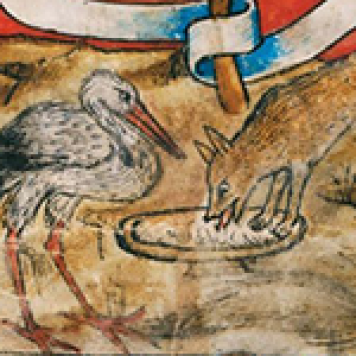
Digital edition of Boner’s “Edelstein”, a collection of Aesopian fables and similar exempla in the German language, written around 1350. | Gerd Dicke (Catholic University of Eichstätt) | | |
| Corpus Masoreticum
Digital edition and critical study of the Western European (Ashkenazi) Masoretic tradition between the 11th and 13th centuries. | Hanna Liss (Heidelberg University of Jewish Studies) | | |
| Hartmann von Aue: Der arme Heinrich
A digital edition of Hartmann von Aue’s legendary verse novella “Der arme Heinrich”, (Poor Henry), written towards the end of the 12th century. | Victor Millet (Universidada Santiago de Compostela)
Gustavo Fernández Riva (Heidelberg University) | | |
| Hartmann von Aue: Erek
A digital edition of Hartmann von Aue’s “Erek”, the first Arthurian romance written in German, composed towards the end of the 12th century. | Joan Dalmases (Universitat de Barcelona)
Victor Millet (Universidade Santiago de Compostela) | | |
| Hartmann von Aue: Gregorius
Digital edition of Hartmann von Aue’s legend of the penintent sinner “Gregorius”, written towards the end of the 12th century. | Emilio González Miranda and Victor Millet (Universidade Santiago de Compostela)
Marie-Sophie Winter (Université de Picardie Jules Verne) | | |
| Hartmann von Aue: Iwein
Digital edition of Hartmann von Aue’s “Iwein”, the second German Arthurian romance, written around 1200. | Victor Millet, Emilio González Miranda and Lorena Pérez Ben (Universidade Santiago de Compostela) | | |
| Heinrich von Veldeke: Eneas
Digital edition of Heinrich von Veldeke’s retelling of Virgil’s epic, written c. 1175–1185. | Christine Puzo (University of Bern) | |
| Die Kaiserchronik
Digital edition, commentary and translation of the three recensions (A to C) of the Regensburg “Kaiserchronik” from the mid-12th century. | Mark Chinca, Helen Hunter and Christopher Young (University of Cambridge]
Jürgen Wolf (Marburg University) | | |
| Konrad von Würzburg: Shorter Stories
Digitale editions of Konrads verse novellas “Herzmäre”, “Der Welt Lohn” and “Heinrich von Kempten” written in the last third of the 13th century. | Gustavo Fernández Riva (Heidelberg University) | |
| Lübeck Law
Online edition of the “Bardewiksche Codex des Lübischen Rechts von 1293”. | Jan Lokers (The archive of the Hanseatic City of Lübeck)
Albrecht Cordes, Bettina Götz und Valerian Klein (Goethe University Frankfurt)
Jürgen Wolf und Robin Kuhn (Marburg University) | | |
| Minnereden and Love Songs
Digital edition of German-language Minnereden and love songs from the Middle Ages (with a focus on the 14th and 15th centuries). | Ludger Lieb (Heidelberg University) | | |
| Nikolaus von Jeroschin: Works
Digital edition of the “Legend of Saint Adalbert” and the “Prussian Chronicle” by Nikolaus von Jeroschin, chronicler of the Teutonic Order in the 14th century. | Ralf G. Päsler (Marburg University) | | |
| Thomasin von Zerklaere: Der Welsche Gast
A digital edition of the text “Der Welsche Gast”, (The Italian Guest) written by Thomasin von Zerklaere in 1215/16, which is the first comprehensive treatise on etiquette in the German language. | Jakub Šimek (Heidelberg University Library) | | |
| Vie de saint Grégoire
A digital edition of the anonymous Old French legend of the repentant sinner who is appointed Pope, probably written around 1170 or 1180. | Françoise Laurent, Ilsiona Nuh and Vanessa Obry | | |
| Wolfram von Eschenbach: Willehalm
A digital edition of the significant medieval cycle of texts by Wolfram von Eschenbach “Willehalm”. The focus is on the three-part collection, comprising the prequel (“Arabel”), the main work (“Willehalm”) and the sequel (“Rennewart”). | Bernd Bastert, Ruhr University Bochum
Lina Hert, Heidelberg University | | |